
Stop Guessing. Start Proving.
The cybersecurity industry operates under a massive illusion of readiness. According to recent benchmark data, 94% of organizations confidently report that they are prepared to detect, respond to, and recover from a major cyber incident. However, when these same teams are put through realistic decision drills, their decision accuracy plummets to just 22%. Worse, it takes them an average of 29 hours to contain simulated attacks.
This is the readiness gap. It exists because organizations continue to run their tabletop exercises and their technical detection tests in complete isolation.
In our latest webinar, Lares experts Mike Crouch (Lead Engineer, Adversarial Collaboration Unit) and Dr. Mark Arnold (Vice President of Adversarial Services) break down exactly why this isolated approach fails and how you can fix it.
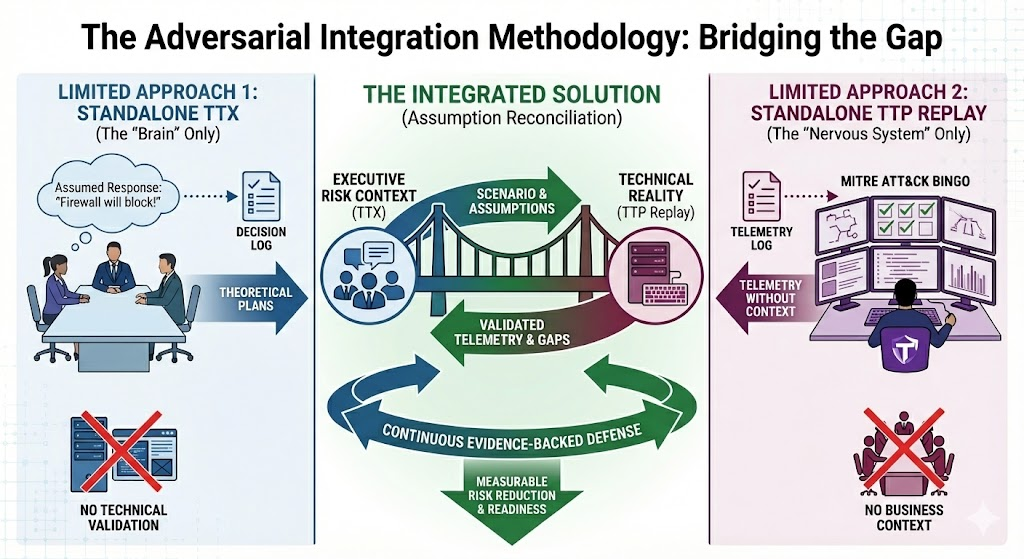
Testing the Brain and the Nervous System
To build a defensible security posture, you must test both the strategic and technical layers of your organization.
Tabletop Exercises (The Brain): A TTX stress-tests your people, processes, and policies. It exposes decision bottlenecks, communication failures across cross-functional teams, and regulatory reporting gaps. But a TTX relies entirely on assumptions. Participants simply assume the firewall will block the attack or the EDR will generate an alert.
TTP Replay (The Nervous System): TTP Replay, or Purple Teaming, tests exactly what your technical controls do in reality. By safely executing real adversarial behaviors in your production environment, it turns the assumption "we think we would catch that" into mathematically verifiable proof.
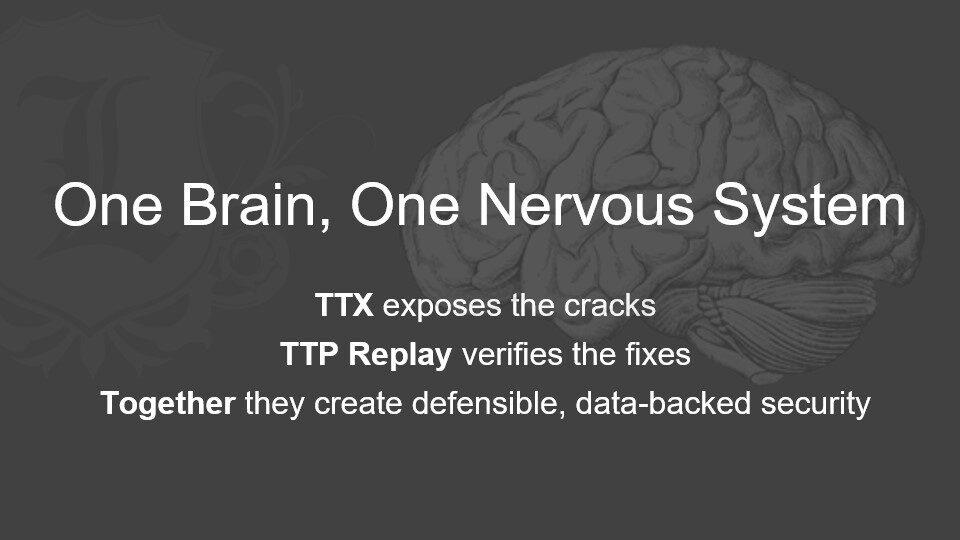
When you run them together, the TTX exposes the strategic cracks and the TTP Replay verifies the technical fixes.
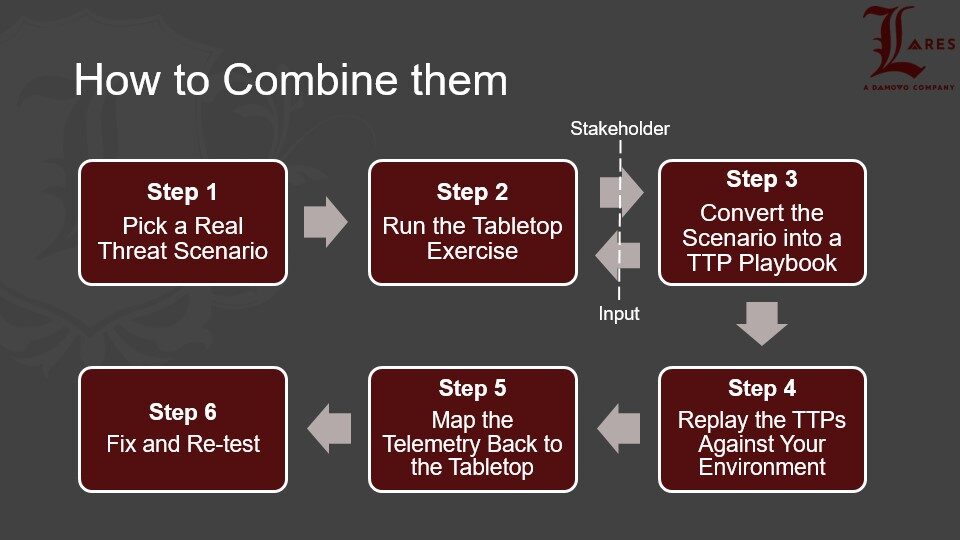
The 6-Step Adversarial Integration Methodology
During the session, Mike and Mark outline a continuous feedback loop that completely transforms how organizations approach incident response readiness:
Select a Relevant Scenario: Start with a scenario rooted in actual threat intelligence and specific business risks.
Run the Tabletop: Execute the exercise to capture assumptions, identify decision owners, and map out escalation paths.
Convert to a Playbook: Define the exact attacker behaviors based on the tabletop assumptions.
Replay the TTPs: Conduct a live-fire purple team engagement to gather raw alert data.
Map Telemetry to Assumptions: Compare the actual telemetry back to the tabletop assumptions to expose detection gaps and hold your vendors accountable.
Fix and Retest: Tune your detections, update the playbooks, and validate those improvements with another test.
Download the Free Webinar Resources
To help you transition from assumed readiness to an evidence-backed defense, we have put together two highly technical advisory resources based on this methodology.
If you are ready to stop playing MITRE ATT&CK bingo and want to start validating your Return on Security Investment (ROSI), the Adversarial Collaboration Unit at Lares is here to help.
Empowering Organizations to Maximize Their Security Potential.
Lares is a security consulting firm that helps companies secure electronic, physical, intellectual, and financial assets through a unique blend of assessment, testing, and coaching since 2008.
16+ Years
In business
600+
Customers worldwide
4,500+
Engagements