Cloud Security Services
Secure What Powers Everything.
Lares Cloud Security Services to help you uncover and close critical risks across your cloud environments-before attackers turn them into breaches.
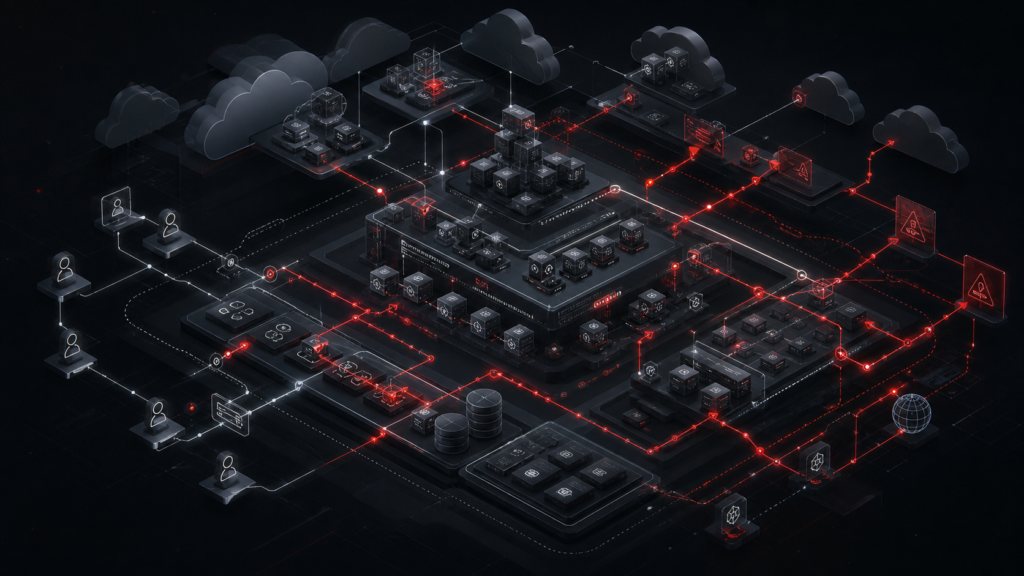
Cloud security is complex. So are today's attack paths.
Misconfigurations, excessive permissions, exposed services, and insecure workloads can create hidden paths to your most valuable assets.
We think like attackers to help you build cloud environments that are resilient by design.
- Full lifecycle cloud testing
- Multi-cloud expertise
- Attacker's perspective
- Business-aligned remediation
Testing Coverage
End-to-end cloud security consultancy and advisory.
Infastructure Security
- Cloud configuration assessments
- Network segmentation & security
- Security groups / NSG reviews
- Storage & database exposures
Identity & Access
- IAM assessments
- Privilege escalation paths
- Cross-account / subscription risks
- Federation & SSO misconfigurations
Workloads & Runtime
- Container & Kubernetes security
- Serverless security assessments
- Image & dependency analysis
- Runtime configuration review
Applicaitons & APIs
- API Security testing
- Authentication & authorization flaws
- Secrets management review
- Input validation & business logic
Data Encryption
- Data exposure analysis
- Encryption at rest / in transit
Engagement Models
Advisory Engagements
Strategic assessments and actionable recommendations to strengthen your cloud security posture.
Assessment Engagements
In-depth testing to identify and prioritize security risks across your cloud environment.
Assurance Engagements
Continuous validation to ensure controls remain effective as your cloud evolves.
Our Methodology
A proven, outcome-driven process.
We define the cloud platforms, accounts, subscriptions, tenants, services, identities, and business objectives in scope.
We assess how workloads, services, identities, and trust relationships are designed across the environment.
We identify exposed services, weak configurations, excessive permissions, risky trust paths, and gaps in defensive controls.
We validate exploitable conditions through manual testing, including privilege escalation, persistence, and chained abuse paths across the environment.
We organize findings by real risk, business relevance, and remediation urgency.
We walk your team through the results and can validate fixes when retesting is needed.
Common Findings
Clear results. Practical next steps.
Cloud risk often develops through combinations of identity weakness, excessive trust, exposed services, and architectural decisions that seem safe until attackers chain them together.
- Overprivileged users, roles, and service accounts.
- Weak federation, entitlement, or identity trust relationships.
- Public exposure that exceeds operational need.
- Insecure secrets handling and credential risk.
- Poor segmentation between services, workloads, and administrative boundaries.
- Data exposure through storage, logging, or service misconfiguration.
- Container, orchestration, or workload control weaknesses.
- Persistence opportunities attackers can retain after initial access.
Frequently Asked Questions
Which cloud platforms do you assess?
Lares assesses AWS, Azure, and GCP environments, including hybrid and multi-cloud deployments where those systems connect to other services or identity models.
Is this different from a cloud configuration review?
Yes. Configuration review is part of the work, but Lares also tests how attackers can abuse identity, privilege, trust relationships, and exposed services to move deeper into the environment.
Do you focus on identity and privilege paths?
Yes. Identity, entitlement, access control, and privilege escalation are core parts of cloud risk and a central focus of our testing.
Can you assess hybrid or multi-cloud environments?
Yes. We can scope environments that span cloud providers, on-premise infrastructure, and shared identity or trust models.
Do you test production environments?
That depends on the goals, risk tolerance, and rules of engagement. In many cases, production testing is possible when carefully scoped and coordinated.
What do we receive at the end of the engagement?
You receive an executive summary, technical findings report, prioritized remediation guidance, a debrief with the Lares team, and optional retesting support.
What do clients receive at the end of the engagement?
Clients receive clear findings and practical recommendations to improve protection, detection, and response across the physical environment. Lares’ broader positioning also emphasizes actionable reporting and guidance that supports real improvement, not just issue identification.
How is this different from red teaming?
A physical security engagement focuses on facilities, physical controls, and attack paths into the environment. Red teaming is broader and tests protection, detection, and response across physical, electronic, social, and converged attack surfaces through active adversary simulation.
Looking for something else?